Eye Exam Costs in Canada

How much does an eye exam cost?


The price of an eye exam will vary based on where you live and the type of eye exam required. On average, most Canadians who are not covered under a provincial or workplace insurance plan will pay between $75 and $200 out of pocket for a standard eye exam. If you require specialized eye care, such as add-on tests (like retinal imaging, OCT scans, or contact lens fittings), this may also raise the out-of-pocket price by an additional $50 to $150 per visit.


In Canada, the cost of an eye exam may also vary based on the province you reside in and whether you qualify for public or private insurance coverage. Some Canadians (particularly children and seniors) often qualify for free or discounted eye exams through their provincial healthcare plan. Many Canadians (and their spouses and dependents) are also covered through insurance provided through an employer. In Canada, some Indigenous or Inuit people may also qualify for the Non-Insured Health Benefits (NIHB) program.

Are eye exams covered under provincial health insurance plans?


In Canada, the cost of an eye exam depends on the province you reside in. In many provinces, children, seniors, and people with medical conditions may qualify for free or discounted vision care through provincial healthcare programs. Below is a rough breakdown, by province, of who qualifies for free or discounted eye exams in Canada. Make sure to verify your exact coverage with your provincial healthcare plan before booking an eye exam.


Province/TerritoryChildren (≤18) – routine eye examsAdults (19–64) – routine eye examsSeniors (65+) – routine eye exams
British ColumbiaCovered – routine exam (generally 1/yr) under Medical Services Plan (MSP)Not covered (routine) under Medical Services Plan (MSP)Covered – routine exam (generally 1/yr) under Medical Services Plan (MSP)
AlbertaCovered – 1 complete exam/benefit year under Alberta Health Care Insurance Plan (AHCIP)Not covered (routine) under Alberta Health Care Insurance Plan (AHCIP)Covered – 1 complete exam/benefit year under Alberta Health Care Insurance Plan (AHCIP)
SaskatchewanCovered – routine exam (1/yr) under Saskatchewan Health (Ministry of Health)Not covered (routine) under Saskatchewan Health (Ministry of Health)Not covered (routine) under Saskatchewan Health (Ministry of Health)
OntarioCovered – 1 major exam/12 months under Ontario Health Insurance Plan (OHIP)Not covered (routine) under Ontario Health Insurance Plan (OHIP)Covered – routine exams every 18 months when healthy; more often if eligible medical condition under Ontario Health Insurance Plan (OHIP)
ManitobaCovered – 1 routine complete exam/24 months under Manitoba Health, Seniors and Long-Term CareNot covered (routine) under Manitoba Health, Seniors and Long-Term CareCovered – 1 routine complete exam/24 months under Manitoba Health, Seniors and Long-Term Care
QuebecCovered – 1 exam/12 months under Régie de l'assurance maladie du Québec (RAMQ)Not covered (routine) under Régie de l'assurance maladie du Québec (RAMQ)Covered – 1 exam/12 months under Régie de l'assurance maladie du Québec (RAMQ)
New BrunswickNot covered (routine optometry is not insured) under New Brunswick MedicareNot covered (routine) under New Brunswick MedicareNot covered (routine) under New Brunswick Medicare
Nova ScotiaCovered – routine exams to age 10 under Medical Services Insurance (MSI) – Optometry ProgramsNot covered (routine) under Medical Services Insurance (MSI) – Optometry ProgramsCovered – routine exams (program for 65+) under Medical Services Insurance (MSI) – Optometry Programs
Prince Edward IslandCovered via Eye See…Eye Learn (pre-K/K: 1 exam + 1 pair glasses) + Program for Elementary Eye Care (grades 1–6: annual exam + up to 3 pairs glasses) under PEI MedicareNot covered (routine for most adults) under PEI MedicareNot covered (routine) under PEI Medicare
Newfoundland & LabradorNot covered (routine with optometrist) under Medical Care Plan (MCP)Not covered (routine) under Medical Care Plan (MCP)Not covered (routine) under Medical Care Plan (MCP)
YukonNot covered (routine under base plan) under Yukon Health Care Insurance Plan (YHCIP), but exceptions may exist for low-income familiesNot covered (routine) under Yukon Health Care Insurance Plan (YHCIP)Covered – 1 exam/24 months under Yukon Health Care Insurance Plan (YHCIP)
Northwest TerritoriesNot covered (routine under base plan) under NWT Health Care Plan + Extended Health Benefits (EHB)Not covered (routine) under NWT Health Care Plan + Extended Health Benefits (EHB)Not covered (routine) under NWT Health Care Plan + Extended Health Benefits (EHB)
NunavutNot covered (routine under base plan) under Nunavut Health Care Plan + Extended Health Benefits (EHB)Not covered (routine) under Nunavut Health Care Plan + Extended Health Benefits (EHB)Not covered (routine) under Nunavut Health Care Plan + Extended Health Benefits (EHB)


If you don’t qualify for provincial coverage, or if your province's public health care plan doesn't cover eye exams, federal programs are available for some groups, such as NIHB (Non-insured health benefits for First Nations and Inuit) for Indigenous Canadians. Many Canadians also rely on private insurance or workplace benefits, which typically cover one exam every 12–24 months to offset the costs of eye exams.


For a clearer idea of your expected costs, you can call your local EyeCare Centre for an estimate, so you can plan your budget accordingly. If cost is a concern, our team can walk you through your options.

How much does an eye exam cost with insurance?


If you're covered by either a provincial healthcare plan or vision insurance through your employer, your eye exam will cost considerably less than out-of-pocket costs. How much you pay for an eye exam will depend on your specific vision plan.


Youths, seniors, and people with specific medical needs qualify for free or discounted eye exams in many provinces. A select few provinces also extend eye exam coverage to everyone. Check your provincial healthcare plan to verify your eligibility and how much you can expect to save on eye exams.


If you have vision insurance through your employer, the co-payments in Canada typically range from $10 to $40, but some insurance plans may cover the entire cost of a comprehensive eye exam. Typical workplace insurance plans cover an eye exam every 12 to 24 months.


Pearle Vision works with all provincial plans and most major insurance plans to help our patients receive affordable eye care. Check your benefits coverage to understand your entitlements. Contact your local Pearle Vision EyeCare Centre to discuss further.

How much does an eye exam cost with no insurance?


The cost of an eye exam in Canada depends on both your location and the type of assessment you need. For those without provincial or workplace vision benefits, a routine eye exam typically ranges from $75 to $200 out of pocket. If specialized services are required—such as retinal imaging, OCT scans, or contact lens fittings—expect to pay an additional $50 to $150 per appointment.

Factors that affect the cost of an eye exam


Eye exams aren’t one-size-fits-all. Several factors come into play that can influence the final price of an eye exam, including where you have the exam, the types of tests performed during the exam, the specifics of your insurance coverage, and any customizations or extra services you opt for.


Where You Receive the Exam

Eye exam costs often depend on where you book your appointment. Retail providers, such as Pearle Vision, generally offer competitive pricing and bundled packages, while independent optometrists or ophthalmologists may charge more.

It’s worth noting that the quality of care is the same across the board. All optometrists in Canada must complete accredited medical training and be licensed to practise, whether they work in a retail setting or independently.


What Tests Are Conducted

The type of tests included in your eye exam also influences the cost. A standard vision check tends to be less expensive than a comprehensive exam that may involve advanced screenings, such as retinal imaging, glaucoma testing, or an Optomap scan instead of traditional dilation. If you wear or plan to wear contact lenses, you can also expect an additional fee, since a contact lens fitting requires extra measurements and evaluation.


What Your Insurance or Provincial Coverage Includes

Your final out-of-pocket cost is shaped by both your insurance plan and any provincial coverage available. Some private insurance plans cover part, or all, of a routine eye exam, but may still require paying a co-payment.


Public health plans like OHIP (Ontario), AHCIP (Alberta), MSP (BC), and RAMQ (Quebec) provide coverage for children, seniors, or people with specific medical conditions. Specialized tests, however, are often not included and may be billed separately.


Additional Customizations

The eyewear you choose after your exam can also affect overall costs. Progressive lenses are often more expensive than single-vision lenses, and features such as anti-reflective coating, blue-light filters, or lens tinting come at an additional charge. Frame prices vary depending on brand, material, and design. Fortunately, many Canadians can use private vision benefits, workplace health plans, or Health Spending Accounts (HSAs) to help offset these expenses.

What’s typically included in eye exams?


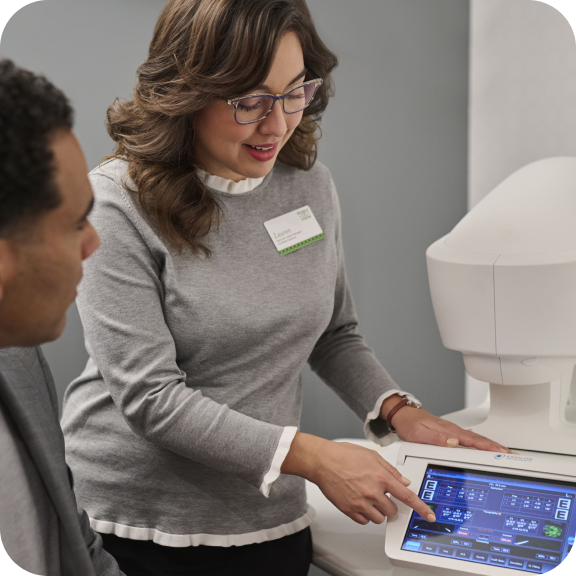
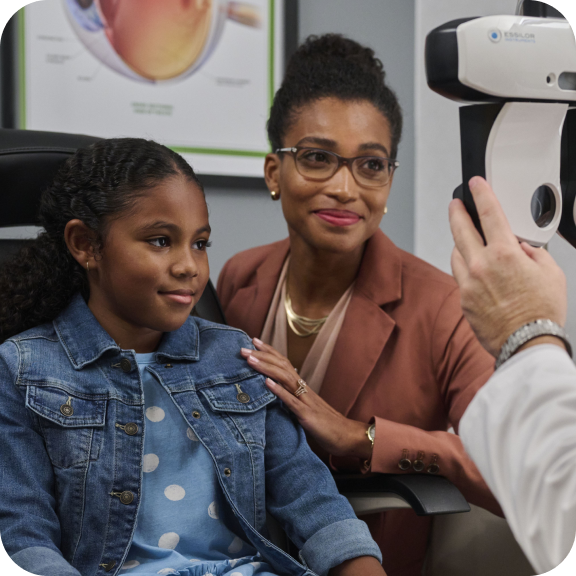
When you book an eye exam at your local Pearle Vision EyeCare Centre, you’ll receive a complete assessment of both your vision and overall eye health. Our optometrists do more than update prescriptions; they also screen for early signs of eye conditions and offer guidance on treatment, if needed. A typical comprehensive exam takes about 20–30 minutes and includes:


  •  Patient history review: Your optometrist will begin by discussing your health background and any current symptoms, such as blurriness, discomfort, or eye strain. Be sure to mention any medications you’re taking, as they can affect your vision.


  •  Vision and eye health testing: A series of tests will be performed to measure your visual acuity, track eye movement, and assess the overall health of your eyes. Depending on your age, risk factors, or symptoms, additional tests may also be recommended.


  •  Contact lens fitting (optional): If you’re interested in wearing contact lenses, extra tests are required to determine the right fit and ensure comfort and safety.

Arrange your eye exam


Regular eye exams are essential for maintaining healthy vision. Beyond updating your prescription for glasses or contact lenses, they help detect early signs of eye conditions such as cataracts, glaucoma, and other vision-related health issues.


Whether you’re covered under provincial health plans (like OHIP in Ontario or MSP in BC) or using private vision benefits, booking an appointment at your local Pearle Vision EyeCare Centre ensures you get thorough, professional care when you need it.

Arrange your eye exam in a few steps

Choose your location

Select the number of patients

Arrange a time

Add to your calendar

Stay up-to-date

Get the latest on our special deals, new collections, and more.

*Eye exams available by Independent Doctors of Optometry at or next to Pearle Vision. Doctors in some provinces are employed by Pearle Vision.

© 2025 Pearle Vision. All Rights Reserved.