If your child squints frequently or covers one eye to see more clearly, it may be a sign that their eyes aren’t working together properly. This can happen with conditions like refractive errors (nearsightedness or farsightedness) or a lazy eye (amblyopia).
Covering one eye helps some children compensate for blurry or double vision. While this might seem like a quirky habit, it’s worth scheduling an exam to rule out vision problems.
Do you find your child sitting just inches away from the television or holding books and tablets very close to their face? While kids do sometimes just like being close to the action, consistently needing to be near a screen or page may indicate myopia, or nearsightedness.
Nearsighted children can see things up close but struggle to focus on objects farther away, like the board in a classroom or a ball on the soccer field.
More and more children are developing myopia at an earlier age. Experts believe this may be due in part to increased screen time and less time spent outdoors. When a child is nearsighted, their eyes are longer than normal, which causes distant objects to appear blurry. Early detection is important because myopia can worsen over time if not properly managed.
Luckily, there are glasses designed to slow the progression of myopia in children. The key is early detection, meaning if you have the smallest inkling your child may be nearsighted, take them to the optometrist as soon as possible.
Children who are straining to see clearly may develop headaches or complain about their eyes feeling tired. Younger kids might not say it outright but may rub their eyes frequently, especially after reading or doing close-up work.
Keep an eye out for complaints about headaches around the forehead or eyes, or if your child seems irritable or fatigued after school.
Kids who struggle to see clearly might find it harder to concentrate, especially if they can’t read the board or follow along with classroom materials. If your child’s teacher reports that they seem distracted, are falling behind in reading, or aren’t engaging as they used to, vision could be playing a role.
Vision problems don’t always look like poor eyesight. Sometimes they show up as behavior changes, lack of motivation, or frustration.
It’s common for early readers to use a finger to help track words, but if your older child still relies on this or often loses their place, it could point to a vision or eye teaming issue.
This may be especially true if your child avoids reading altogether or complains that words seem to “move” on the page. An eye exam can help identify if a vision problem is interfering with reading comfort.
Some children unconsciously adjust their head position to help one eye focus better than the other. If your child regularly tilts their head, turns to the side, or adopts a preferred viewing angle to watch TV or read, it could be a sign of a refractive issue or binocular vision disorder.
Mentioning these small habits to your optometrist during an exam can be helpful.
Older children may begin to articulate vision issues more clearly. If your child mentions that things look blurry, or that they’re seeing double, don’t wait to book an eye exam.
While some vision problems can be addressed with glasses alone, others may require treatment like patching or vision therapy. Early detection is key.
Does your child often trip, bump into things, or struggle with activities like catching a ball or riding a bike? Poor depth perception or undiagnosed vision issues can affect coordination.
While clumsiness isn’t always related to eyesight, when paired with other signs, it’s worth a closer look.
If your child avoids puzzles, coloring, reading, or other tasks that require focused vision, they may be trying to avoid visual discomfort. Vision problems can create frustration, not just physically, but emotionally.
Children don’t always know how to express that something feels “off.” Listening to what they enjoy, or don’t enjoy, can give you helpful clues.
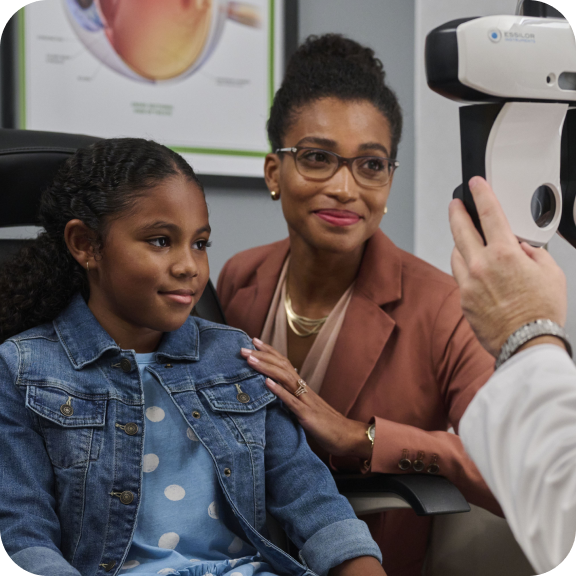
The only way to know for sure if your child needs glasses is through a professional eye exam with an optometrist. Pediatric eye exams are designed to be kid-friendly and include checks for:
At Pearle Vision, our neighborhood EyeCare Centers are built with families in mind. We take time to make kids feel comfortable, listen carefully, and offer solutions that support their unique needs.
From the classroom to the playground, clear vision plays a big part in how your child experiences the world. If you’ve noticed any of these signs, or if your child hasn’t had an eye exam in over a year, it’s a great time to connect with your neighborhood Pearle Vision.
Our optometrists offer comprehensive eye care tailored to kids, along with a wide selection of frames they’ll love to wear. Find your neighborhood Pearle Vision and book an eye exam today.
Choose your location
Select how many patients
Schedule an eye exam
Add to calendar